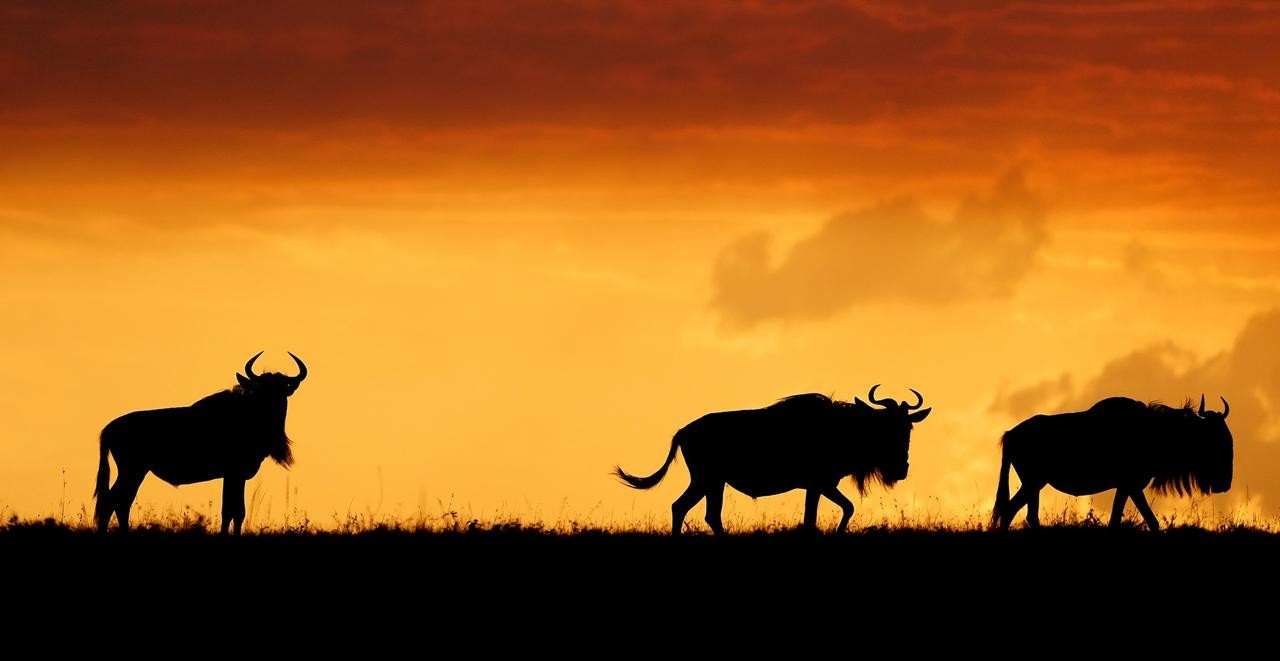
Hear the drumbeat of the earth, friends. It is calling.
The dry winds have swept the Lowveld, the acacia stands bare but watchful, and beneath the wide African sky, the ancient rhythm begins again. When the first summer rains kiss the red soil and the rivers stir from their sleep, the herds will move. Not as wanderers, but as one breathing tide.
In Kruger, the wild does not rush without reason. The wildebeest gather when green whispers across the veld—usually as the rainy season peaks, between December and March. But the true gathering? It swells as the dry months draw near, when the pans crack and the great rivers shrink to silver threads. That is when the hooves drum the soil, when dust rises like morning mist, and the sky fills with the sharp cries of circling tawny eagles.
Come. Stand where the elders stood. Let the sun warm your shoulders as the plains tremble beneath a thousand steady steps. Bring your eyes, your patience, your quiet heart. Watch as the old paths unfold—not in panic, but in harmony with the land. The river crossings will test their courage. The calves will find their legs in the dust. And you, my people, will witness life itself, unbroken and wild.
Uyabona? Do you see it? The bush is ready. The herds are moving along the Letaba, the Olifants, and the fringes of the Limpopo. Pack light. Speak soft. Walk with respect. The veld remembers those who come as guests, not masters.
When the moon hangs low and the jackal calls his evening song, the earth will speak. Will you be there to listen?
Join us beneath the baobab’s wide shadow. Secure your journey. Step into the rhythm. The migration does not wait—but it welcomes those who arrive with open eyes and a grateful spirit.
Siyakwamukela. We welcome you. The wild is calling. Answer it.
When to Catch the Next Wildebeest Mass Migration.
Year-Round Migration Cycle:
January – March: Calving SeasonThe herds congregate in the nutrient-rich, short-grass plains of the southern Serengeti in Tanzania and the Ngorongoro Conservation Area. More than 500,000 calves are typically born within a few weeks, attracting predators such as lions, hyenas, and cheetahs.
April – May: The RutAs the southern plains begin to dry, the mega-herds move northwest in long columns (sometimes up to 40km long) towards the Moru Kopjes and the Western Corridor. This is the action-packed breeding season.
June – July: Grumeti River CrossingsThe herds enter the Western Corridor of the Serengeti and must make their first major, dangerous river crossings at the Grumeti River, which are notorious for massive Nile crocodiles.
July – September: The Mara River CrossingsThis is the iconic window of the migration. The herds push north into the Lamai Wedge and arrive at the swollen Mara River—the final barrier to the lush grasslands of Kenya's Maasai Mara. The chaotic, survival-driven crossings here are considered one of the greatest natural spectacles on Earth.
October – December: The Return TrekThe herds spread out across the Maasai Mara.
As the short rains fall in the south, the migration begins the long journey back down through the eastern Serengeti to start the cycle all over again